
Designing lighting for wellbeing: integrating daylight and artificial light at home
Updated: 20 hours ago
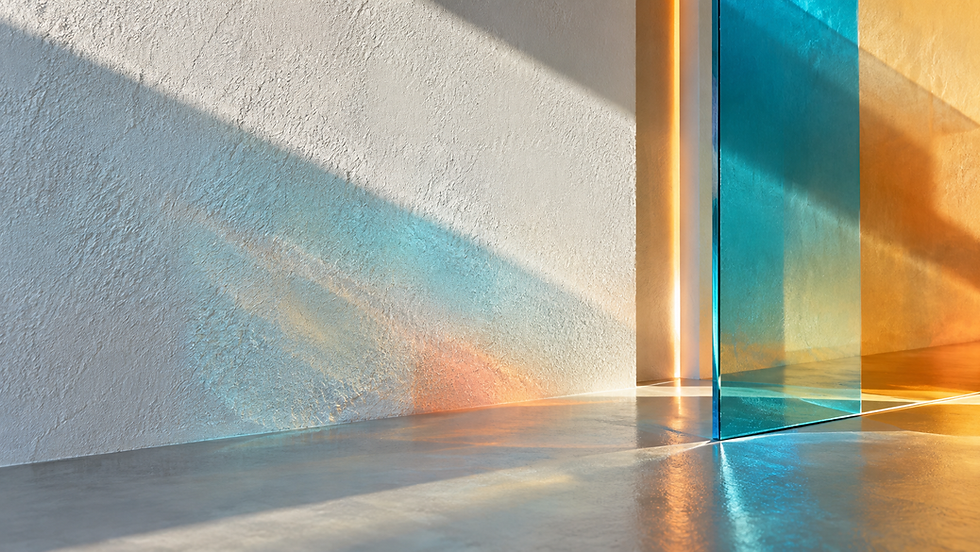
An evidence-based guide to lighting design for wellbeing: combining daylight and artificial light, choosing colour temperature and when to call a specialist.
Lighting for wellbeing is a quiet subject that shapes daily life more than most people notice. Good lighting supports rest in the evening and clear focus during the day. It does this by working with daylight rather than against it.
The aim is a home that feels calm at night and alert in the morning, guided by evidence rather than trends. This article looks at how daylight and artificial light work together, and how specialist expertise can strengthen a project.
How lighting for wellbeing shapes interior spaces
Lighting for wellbeing works when it supports the body's circadian system and gives the eyes visual comfort. In practice, that means pairing daylight with artificial light planned for the room and the hour.
The body keeps a daily internal clock, known as the circadian rhythm, and light is one of its main signals. Bright light by day and dim, warm light at night help keep that rhythm steady and support the sleep-wake cycle.
Because most of life now happens inside, the light designed indoors carries real weight. The U.S. Environmental Protection Agency reports that Americans spend roughly 90 percent indoors. That figure is US-specific, so it reads best as indicative rather than a global measurement.
Daylight also does more than help people see. A 2024 systematic review in the Journal of Environmental Psychology on the restorative effects of daylight describes two routes. Daylight acts through psychological routes and through biological routes such as the regulation of circadian rhythms through the eye.
Light influences how people think and focus, while colour and warmth influence how a room feels. Lighting for wellbeing comes from designing both together.
Daylight as the foundation: architectural strategies for natural light
Daylight is the starting point for lighting a space well, and artificial light is best planned to support it. Daylight shifts through the day and gives a room a depth that fixed fixtures rarely match.
Several choices decide how much daylight reaches a room. Orientation, window size and placement set the baseline, while skylights and clerestory openings bring daylight deeper into rooms, including single-aspect spaces.
Lighter finishes and reflective surfaces carry that daylight further inside, so a room can stay bright without larger windows. Window treatments then balance it, with sheer layers keeping daylight soft and heavier options giving control when the sun is low. Daylight also needs balancing with glare control, shading, solar gain and thermal comfort, which is particularly important in hot climates.
The wellbeing case for daylight is supported by research, though most of it studies offices rather than homes. In a case-control pilot, office workers near windows slept about 46 minutes longer per night than those in windowless workplaces (Boubekri et al., 2014, N=49).
A second, smaller study points the same way, with an important caveat about funding. In a 2020 crossover study, 30 office workers slept 37 minutes longer and scored 42 percent higher on cognitive simulations. It was funded by View Inc., and those scores came from a simulation rather than on-the-job output (Boubekri et al.).
Both studies were office-based, so a similar benefit is plausible at home but not yet proven there.
Layering artificial light: ambient, task and accent
When daylight fades, one ceiling fitting rarely does the job well. A single overhead source tends to flatten a room and cast hard shadows, which many people find tiring to sit under.
Layered lighting solves this by giving a room several sources instead of one. Ambient light provides the soft background glow, while task light adds focused brightness where people cook, read or work. Accent light then picks out a painting or a textured wall once the practical layers are set.
Good layered lighting plans treat fixture placement and dimming as deliberate design decisions. Dimming lets a room move from bright at breakfast to soft at night. A slight shift towards warmer tones mirrors the way natural light fades at dusk.
Colour temperature, light quality and visual comfort
Colour temperature, measured in kelvin, describes how warm or cool a light appears. Colour rendering (CRI) is a widely used indication of colour fidelity rather than a complete measure of how truthfully a source reveals colour, and glare is the discomfort from brightness or harsh contrast.
The ranges below are common starting points that can be adjusted to each home.
Space and typical use | Colour temperature | Typical context of use |
Bedrooms and evening living areas | 2200–2700 K (warm) | Relaxed evenings and winding down |
Kitchens, bathrooms and daytime living | 3000–4000 K (neutral) | Everyday tasks and general daytime use |
The right choice depends on the daylight a room receives, the time of day, the wider residential setting and personal visual preference.
Matching colour temperature to the time of day
A useful principle is to relate artificial light to the daylight a room would have at that hour. An appropriate residential solution depends on the daylight a room receives, the visual tasks that happen there and the light's intensity and spectrum. It also reflects the timing through the day, personal preference and continuity with adjoining spaces.
Colour appearance is only part of the picture. Non-visual responses to light also depend on intensity, spectrum, timing, duration and distribution, and do not rest on colour appearance alone.
Reducing bright, blue-rich light in the last hours before sleep can help the body settle. WELL's Circadian Lighting Designfeature is one certification framework that evaluates circadian lighting under defined conditions. It reads best as a structured reference point rather than a universal residential rule.
Smart bulbs and tunable fittings make this easier, adjusting warmth and brightness on a schedule as the day changes.
Managing glare and keeping light comfortable
Glare and harsh contrast can undo careful lighting, and often lead to squinting and fatigue. Comfort improves when bright sources sit out of direct view.
Shielding bulbs and bouncing light off walls and ceilings keeps sources gentle, while blinds or sheer curtains soften strong daylight from windows.
Contrast matters even without direct glare. A pool of bright light beside a dark wall can tire the eyes, so gentle transitions between zones keep a room easy to look at.
The recognised illuminance guidance from CIBSE explains the reasoning. Recommended luminance ratios aim to protect visual acuity and to reduce the likelihood of discomfort glare.
Designing light together with colour and materials
Light and colour are read together, never in isolation. A paint colour or timber finish can look warm under evening lamplight, then cooler and flatter under midday daylight.
A surface's lightness and reflectance largely set how much light it returns to a room. Pale, matte walls spread soft light and lift the general brightness, while darker, lower-reflectance surfaces send back less and can leave a space feeling dimmer. The same fitting can feel generous in one palette and subdued in another.
Texture changes the reading again. A rough plaster or woven fabric scatters light and softens it, while polished stone and gloss paint reflect it in sharper highlights.
Contrast between surfaces guides the eye and sets the mood. A gentle step between a wall and its joinery feels calm, while a sharp jump from light to dark draws attention and adds energy. Saturated colour intensifies that effect, since strong hues read more vividly under bright light.
Daylight then moves all of this through the day. Its spectrum, direction and intensity change with the time of day, a room's orientation, the climate and the weather, so a single wall shifts in tone from morning to dusk.
Sampling is the practical answer. Viewing finishes under the actual fittings, at several times of day, shows how a palette will really behave before anything is fixed.
MindSpect's approach is grounded in research and treats light, colour, materials and the hour of day as one design question. That integrated view sits behind The Wellbeing Spectrum, its combined lighting and colour consultancy.
When to involve a lighting specialist
Lighting specialists work alongside architects and interior designers, adding depth to a shared design rather than standing apart from it. Their scope flexes to suit each project, whether a focused review of a few rooms or a full lighting strategy.
The value of that collaboration grows with a project's complexity. It also grows with wellbeing goals and with the number of rooms that change use through the day.
What a lighting specialist adds
A lighting specialist brings a layered strategy, backed by technical reasoning. That work covers colour temperature and CRI, together with glare control and fixture distribution, so each choice can be explained rather than left to taste.
Thoughtful specification also uses resources well. Fewer, better-placed fixtures often achieve more than a ceiling full of downlights, which can reduce both glare and running costs.
Architects and interior designers shape space, materials and atmosphere, and a lighting specialist tunes how light supports that work.
The right moment to bring one in
The strongest outcomes tend to come from involving a specialist early, before layouts, window positions and ceilings are fixed. Those decisions set the limits of what lighting can later achieve.
Sharing elevations, sections and floor plans, rather than only a reflected ceiling plan, lets a specialist work with the architecture from the start. Value can still be added later, with a specialist refining finishes and controls in step with the wider team.
Practical takeaways
Treat daylight as the primary source, then plan artificial light to fill the gaps it leaves.
Give each room a mix of ambient, task and accent light rather than one overhead fitting.
Set colour temperature from the daylight and the hour, then adjust to suit the room and personal preference.
Shield bright sources and keep transitions between light and dark surfaces gentle.
Test finishes under the actual fittings at several times of day before fixing them.
Bring a lighting specialist into the team early, sharing full drawings rather than a ceiling plan alone.
Frequently asked questions
How can more natural light be brought into a home?
Improving orientation where possible, adding larger or better-placed windows and skylights, and using lighter finishes all help daylight reach further inside. Reflective surfaces carry that light deeper into a room without the need for larger openings.
What is the difference between an interior designer and a lighting consultant?
Interior designers shape the wider spatial experience, including layout, materials and atmosphere. A lighting consultant contributes specialist expertise in light distribution, visual comfort, specification, controls and the relationship between light, colour and human experience. The strongest results come from close collaboration between both disciplines.
When should a lighting consultant be involved in a project?
Involving a lighting consultant early, before layouts, window positions and ceilings are fixed, gives the widest scope. Sharing full drawings rather than a ceiling plan alone helps the consultant work with the architecture. Value can still be added later, with the consultant refining finishes and controls alongside the wider team.
What are circadian rhythms and how do they relate to lighting?
Circadian rhythms regulate the body's daily patterns of sleep and alertness, with light acting as one of their principal time cues. The effect depends not only on colour appearance, but also on intensity, spectrum, timing and duration. Generous light exposure during the day, followed by lower and gentler light levels in the evening, can help support a healthy daily rhythm.
Designing for the whole day
Lighting for wellbeing comes from daylight, artificial light, colour and materials designed together. It rests on evidence rather than passing trends, and on how people actually live. The most comfortable spaces come from steady attention to how light behaves across a day.
When these elements are considered early and as a whole, a home can feel calm at night and clear in the morning. That quiet result is the aim of human-centric lighting and colour, where a space is designed around the people who live in it.
Comments